

BASIC TRAINING

The Application period for the 2026-27 academic year is now closed.
To apply for the 2027-28 academic year, please check back in the Fall of 2026 for further instructions.

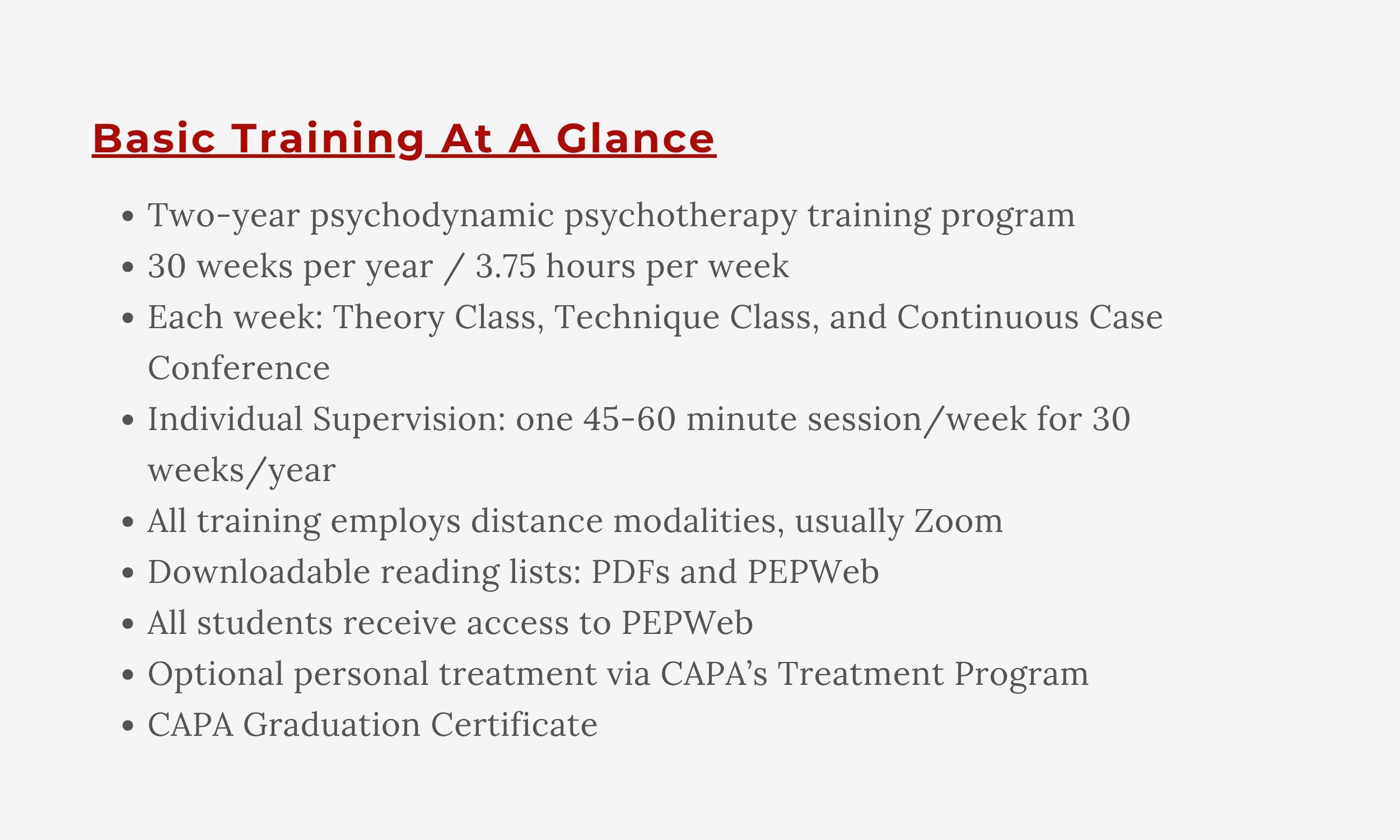
CAPA's 2-year Basic Training Program students attend Theory, Technique, and Continuous Case Seminar courses for 1.25 hours per week each, for a total of 3.75 hours of weekly class time. Coursework includes weekly reading assignments, lectures, full class discussions, seminar style discussions, and written homework assignments. Simultaneously, trainees participate in at least 30 sessions of individual supervision each training year. Individual supervision enhances the classroom learning experience, deepens students’ work with patients, and prepares students to submit the psychodynamic case formulation for graduation. It is recommended that trainees contribute to their CAPA experience with optional personal treatment, embracing the full training experience. Students may apply to be matched with a personal treater for psychotherapy (1-2x weekly) or psychoanalysis (3-4x weekly) through CAPA's optional Treatment Program, at an additional cost.
Each year, CAPA invites 40 applicants to the Basic Training Program, although the size of the class may vary slightly from year to year under special circumstances.
CAPA's mission is to train the leaders of the next generation of Chinese psychodynamic psychotherapists. To this end, only people who will reside full-time in China throughout their training and who are planning to work in China throughout their careers are eligible to apply for CAPA Training.
Basic Training Goals and Learning Outcomes
Participants in the program will:
Develop a strong foundation in psychodynamic psychotherapy concepts through courses in Theory, Technique and Continuous Case Seminar, delivered by highly qualified faculty from around the world.
Apply theories and techniques learned in coursework to real-time work with patients.
Deepen their clinical skills through weekly individual supervision and experience the benefits of the long-term supervisory dyad.
Have the opportunity to engage in optional personal treatment (psychotherapy or psychoanalysis) to further their personal and professional growth.
Enhance their ability to help clients better understand themselves, their conscious and unconscious processes, and change their maladaptive behavioral patterns in their lives by making more satisfying and productive choices.
Basic Training Course Outline
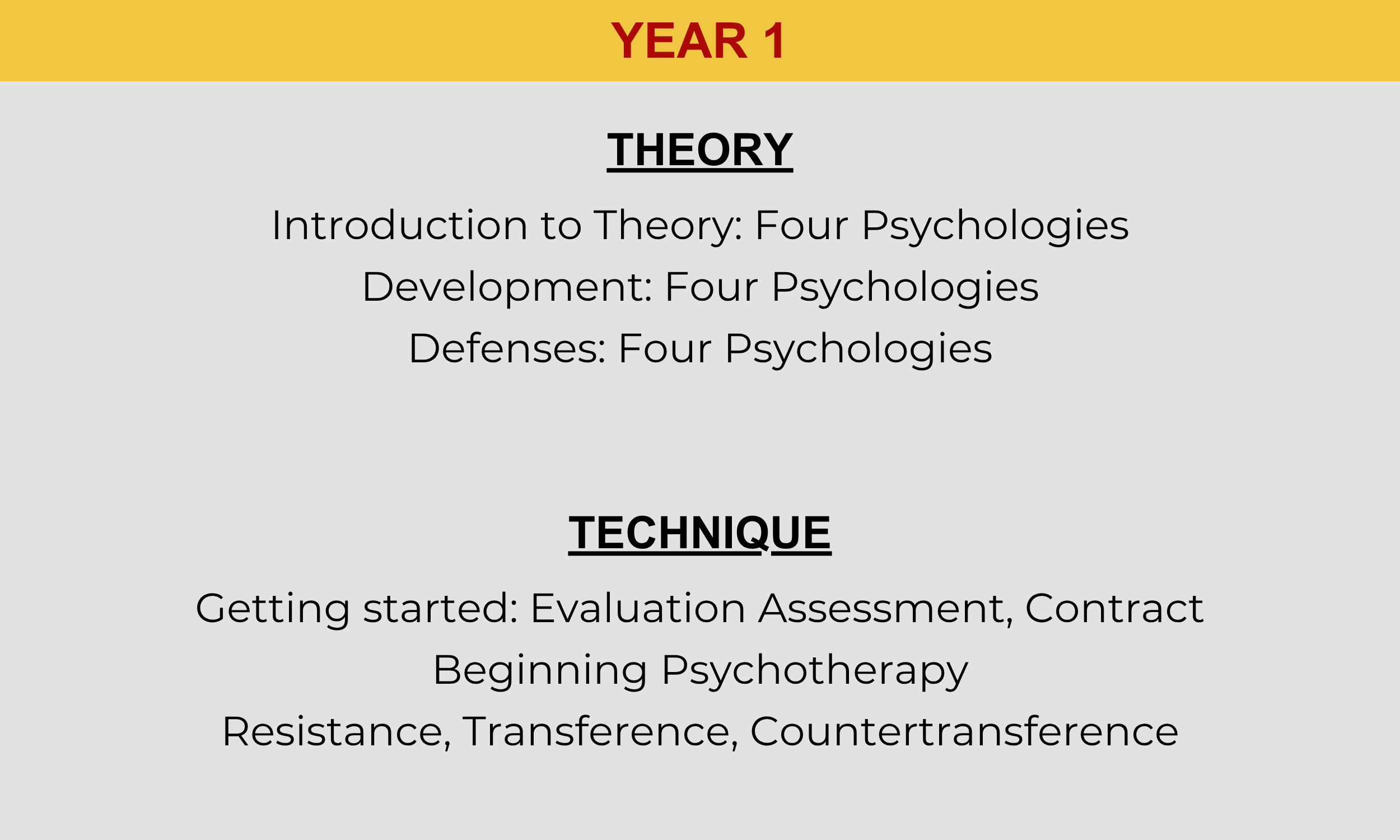
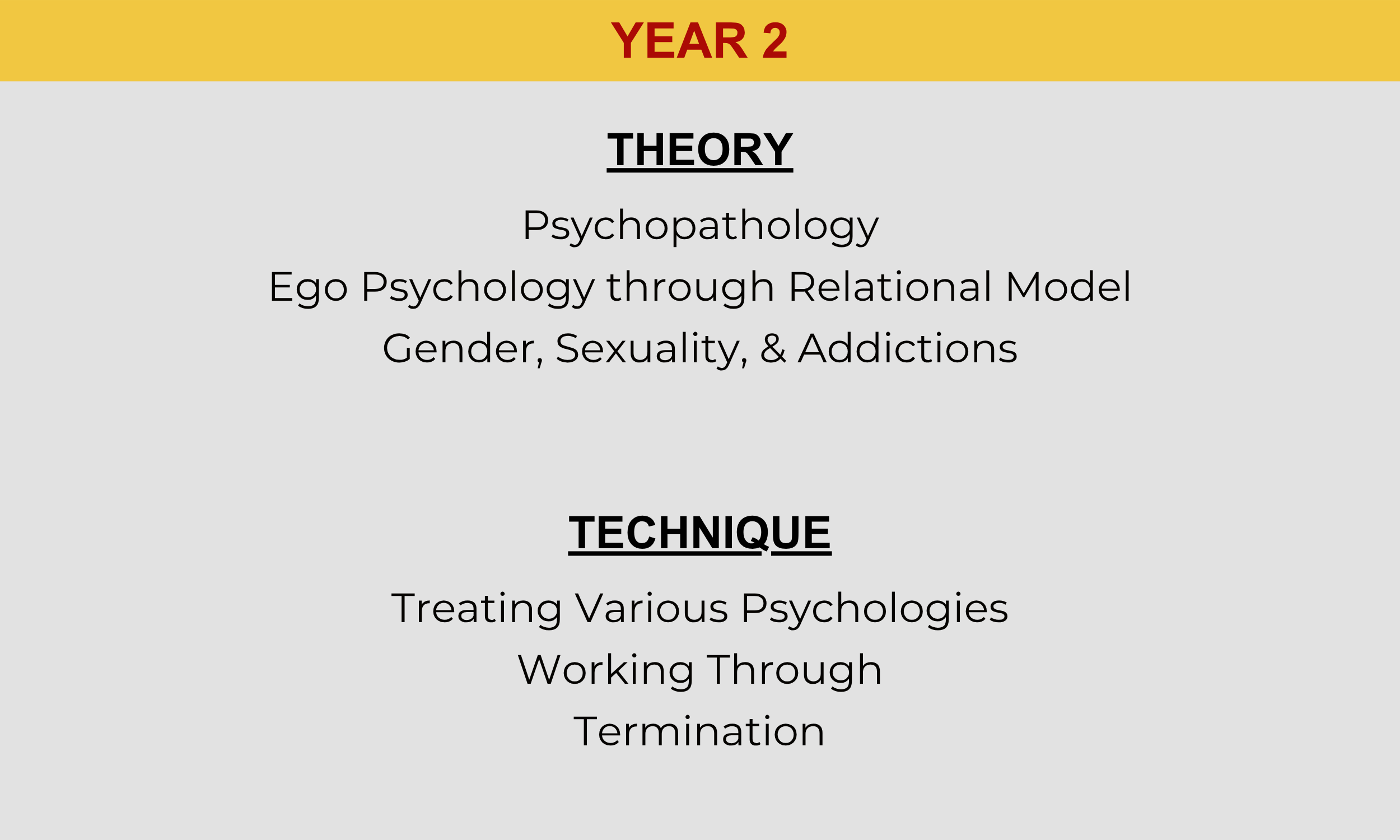
Along with the dynamic Continuous Case Seminar course, CAPA’s Theory and Technique courses provide a strong foundation in the topics below:

Watch a short video describing the application process.
Admission Criteria and Prerequisites for Basic Training
Updated admission criteria and prerequisites for Basic Training coming soon!