

ADVANCED TRAINING

The Advanced Training application period for the 2026-27 academic year is now closed.
To apply for the 2027-28 academic year, please check back in the Fall of 2026 for further instructions
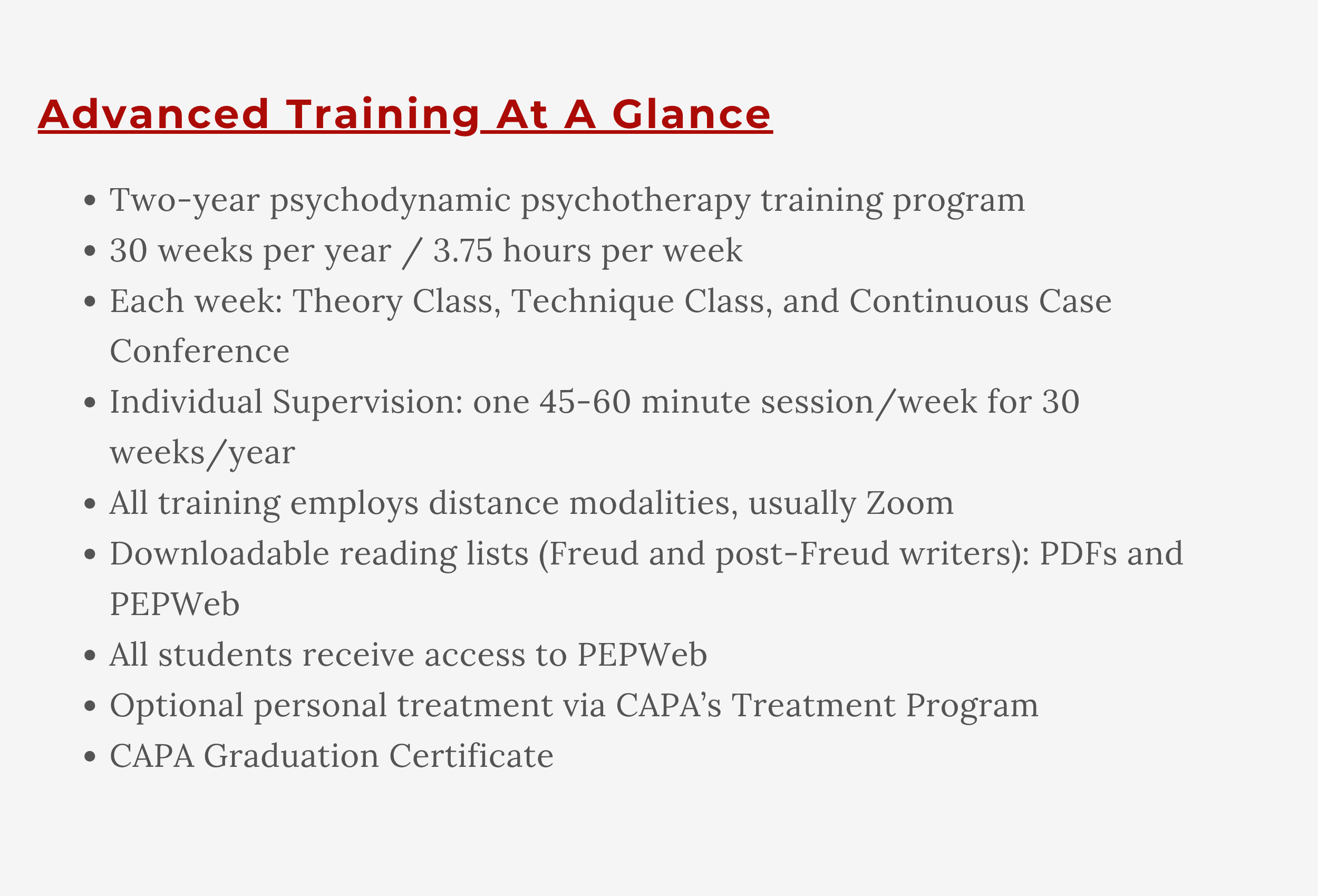
CAPA’s Advanced Training is a 2-year program open only to currently enrolled Year 2 Basic Training students and graduates of CAPA's Basic Training Program who are eligible to reapply this year. Trainees attend Theory, Technique, and Continuous Case Seminar courses for 1.25 hours per week, for a total of 3.75 hours of weekly class time. Simultaneously, trainees participate in at least 30 sessions of individual supervision each training year, which further enhances the classroom learning experience. It is recommended that trainees contribute to their CAPA experience with optional personal treatment, embracing the full training experience. Students may apply to be matched with a personal treater for psychotherapy (1-2x weekly) or psychoanalysis (3-4x weekly) through CAPA's optional Treatment Program, at an additional cost.
Each year, CAPA invites 30 applicants who have successfully completed the Basic Training Program to the Advanced Training Program, although the class size may vary slightly from year to year under special circumstances. Also, it is CAPA's mission to train the leaders of the next generation of Chinese psychodynamic psychotherapists. To this end, only people who will reside full-time in China throughout the training and who are planning to work in China throughout their careers are eligible to apply for CAPA Training.
Advanced Training Goals and Learning Outcomes
Participants in this program will:
Engage in two additional years of coursework in Theory, Technique, and Continuous Case Seminar, further developing their skills as psychodynamic psychotherapists
Deepen their ability to apply psychodynamic theory and technique in their clinical work
Gain more advanced experience in individual supervision, working with greater complexity and insight
Expand their knowledge of the writings of Freudian and post-Freudian scholars
Have continued opportunities to engage in optional personal psychotherapy or psychoanalysis to further their personal and professional growth
Increase their understanding of clients’ conscious and unconscious processes, their impact on behaviors (including maladaptive behaviors), and how to foster lasting change in clients
Build on their foundational knowledge while developing the skills needed to become future teachers of psychodynamic psychotherapy
Advanced Training Course Outline
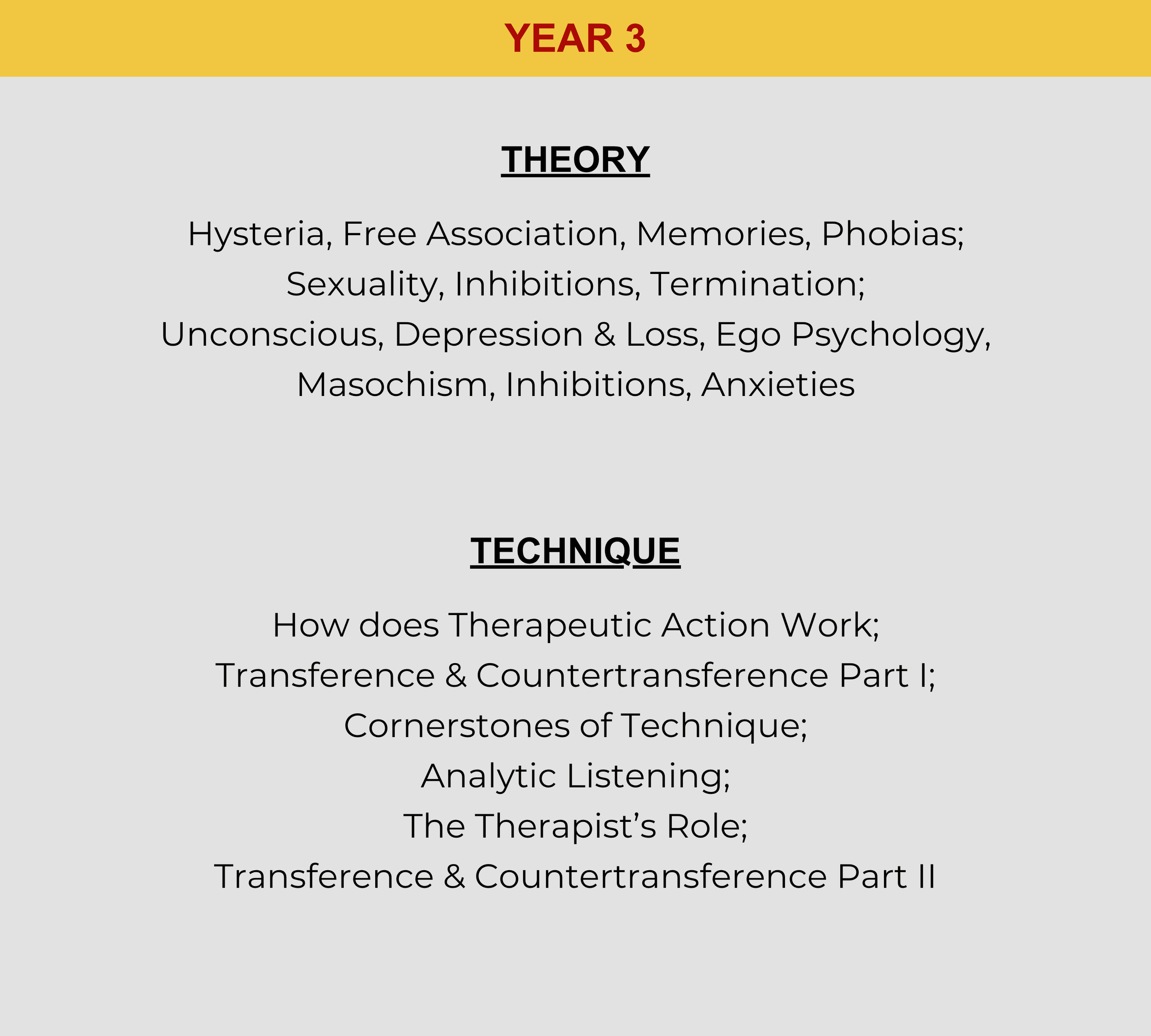
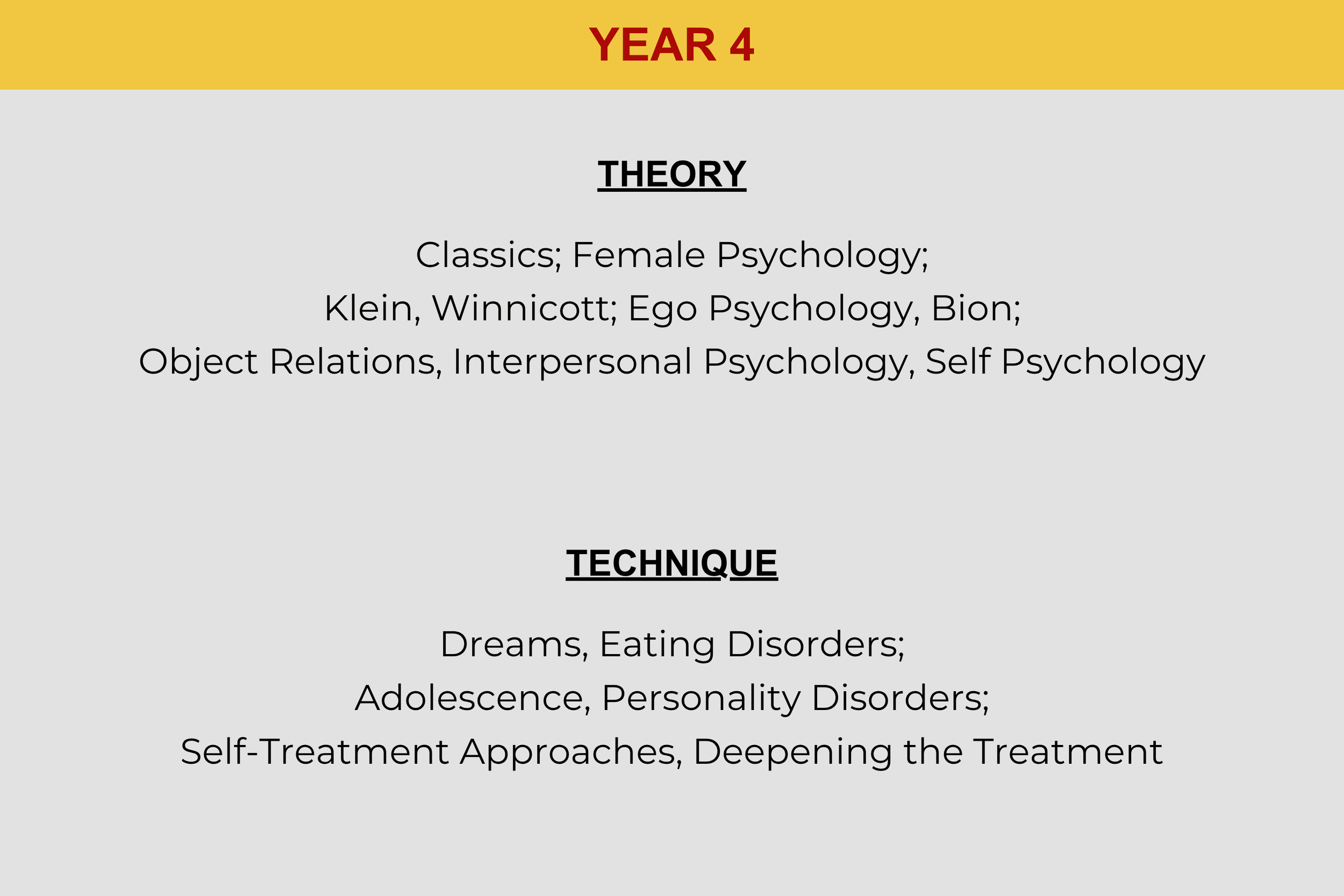
Along with the dynamic Continuous Case Seminar course, CAPA’s Theory and Technique courses provide advanced study of the topics below.
Progression Criteria and Requirements
Only Basic Training graduates may apply for Advanced Training. A complete application to Advanced Training includes submitting the application form with a current CV, a psychodynamic case formulation, and process notes. If not invited to Advanced Training, trainees have the opportunity to apply again in the future by submitting an application that includes two letters of recommendation (from a boss, supervisor, professor, or CAPA Advanced graduate) to further support their current readiness for the Advanced Training Program.
The Progression Committee reviews the application materials plus the applicants’ academic records including class performance, supervision evaluations, and disciplinary issues to determine the readiness of the trainee for the Advanced Program.